
Storytelling & Interpretation in Vocal Performance
In John Lennon’s famed composition Imagine, the lines “Imagine no possessions, I wonder if you can, No need for greed or hunger, A brotherhood of man…” invite listeners to reflect on peace and unity. Lennon’s slow, melodic, wistful vocals draw us into the piano ballad and encourage introspection. To the casual listener, Imagine might simply feel like a soothing, hopeful song, but a trained ear recognizes the powerful storytelling embedded in its simplicity. His delivery is not accidental—it is interpretive artistry.
A song is far more than what reaches the ears. What audiences truly experience is a complete package: vocal technique intertwined with evocative performance. A singer is not only a vocalist but also a storyteller and, in many ways, an actor. Understanding how to interpret a song elevates a performance from pleasant to profound, from amateur to professional.
Interpretation, at its core, involves multiple facets: text analysis, vocal coloring, facial expression, dynamic control, timing, phrasing, and emotional connection. When these elements come together, the result is a performance that resonates deeply.
Breaking It Down
Study the Lyrics
Every songwriter draws from personal experience, cultural context, or emotional landscapes. To interpret a piece authentically, explore the lyricist’s world—their background, influences, and the milieu in which the song was written. For songs in other languages, translation is essential, but go deeper than literal meaning. Understand the nuance, subtext, and poetic intention. Look at the song from the writer’s perspective—what were they trying to communicate?
Look for the Emotional Arc
Most songs travel through a dynamic emotional journey. Identify where the mood shifts, builds, or resolves. These patterns are especially vital in opera, where characters often move through complex emotional states within a single aria. Understanding the arc helps you support the narrative through vocal and physical choices.

Add Color to Your Performance
Not in the visual sense, but in the emotional palette of the voice. Music carries colors—dark, somber tones; light, airy brightness; sharp intensity; or warm tenderness. Pop songs often lean toward cheerful or intimate shades, while classical music offers an entire spectrum, from joyful celebration to political or emotional lament. Vocal color helps define the emotional climate of a piece.
Master Phrasing
Once you understand the song’s story, shape the phrases to reflect meaning. Does a line require a smooth, legato delivery to express longing? Or does the moment demand quick, staccato precision to convey urgency or excitement? Phrasing is where technical choices meet artistic intention.
Use Body Language
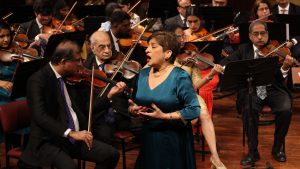
Body language completes the storytelling. Facial expressions reveal what lies beneath the lyrics, while posture and subtle gestures deepen connection. Effective physical communication doesn’t overshadow the voice—it amplifies the emotional message and draws the audience deeper into the story.
Genre-Specific Approaches
Classical / Opera: Each genre requires a certain approach and study. Align your practise to the form of your choice. Use vocal color rather than overt gestures.
Musical Theatre: In this character-led form, it combines acting with singing techniques. It relies on clear delivery narrative.
Pop / Jazz: These offer greater freedom for the singer to play with emotion to create an evocative performance.
Storytelling matters because it transforms singing into an immersive experience. It leaves a lasting imprint on the audience and helps define the singer’s unique artistic identity. Through interpretation, a performer doesn’t just sing a song—they bring it to life.